
Turkey Meatball Curry in a Tomato-Free Coconut Base (Pitta-Friendly)
This curry is light, cooling, anti-inflammatory, and designed specifically for Pitta by removing tomatoes, chilies, excessive heat, and acidic ingredients. The coconut base, coriander-forward spice blend, fennel, and sweet vegetables make it deeply soothing to the digestive tract, liver, and blood.
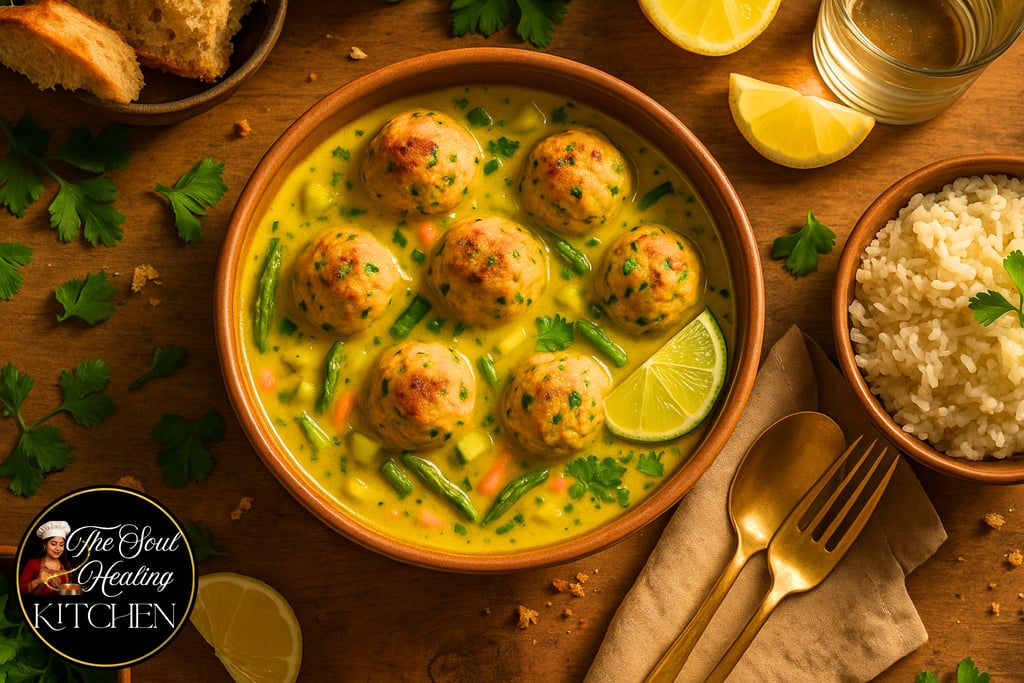
📝 Ingredients & Quantities
Base Ingredients
Ground Turkey (lean or mixed) – 500g
Substitute: Ground chicken (lighter), ground lamb (not for Pitta)Coconut Milk (light) – 1 cup
Substitute: Diluted cashew milk (¾ cup + ¼ cup water)Water – 1½–2 cups
Zucchini – 1 medium, finely chopped
Substitute: Yellow squashAsparagus Tips – ½ cup, chopped
Substitute: Green beansGrated Carrot – ½ cup
Substitute: Sweet potato (for Vata), avoid for KaphaFresh Lime Juice – 1–2 teaspoons (added after cooking)
Ghee or Coconut Oil – 1 tablespoon
(Pitta: coconut oil preferred)
For the Turkey Meatballs
Ground Turkey – from above
Grated Zucchini – ¼ cup (adds moisture without heat)
Oat Flour or Rice Flour – 2 tablespoons
Salt – to taste
Coriander Powder – 1 teaspoon
Fennel Powder – ½ teaspoon
Ginger (very small amount) – ½ teaspoon, grated
Roll into small balls (around 16–18). Set aside.
Spices You Will Need
Fresh Ginger – 1 teaspoon, grated
Rasa: pungent | Virya: heating | Vipāka: sweet
Used lightly to support digestion without overheating PittaFennel Seeds – 1 teaspoon
Rasa: sweet–bitter | Virya: cooling | Vipāka: sweet
Cooling digestive; soothes Pitta and prevents acidityCoriander Powder – 2 teaspoons
Rasa: sweet–bitter–pungent | Virya: cooling | Vipāka: sweet
Deeply Pitta-balancing; supports liver and metabolismTurmeric – ½ teaspoon
Rasa: bitter–pungent | Virya: heating | Vipāka: pungent
Purifies blood, calms inflammation in a gentle, Pitta-safe wayCardamom Powder – ¼ teaspoon
Rasa: sweet–pungent | Virya: cooling | Vipāka: sweet
Uplifts the curry; harmonizes the coconut baseCumin Seeds – ½ teaspoon
Rasa: pungent–bitter | Virya: heating | Vipāka: pungent
Used minimally to avoid Pitta aggravation while supporting AgniCilantro – handful, chopped
Rasa: bitter–sweet | Virya: cooling | Vipāka: sweet
Soothes heat in the liver and blood; essential for PittaFenugreek Leaves (Kasuri Methi) – 1 small pinch
Rasa: bitter | Virya: heating | Vipāka: pungent
Used sparingly; aids digestion without aggravating PittaStar Anise – ¼ pod (optional; remove before serving)
Rasa: sweet–pungent | Virya: mildly warming | Vipāka: sweet
Adds a calming, aromatic sweetness suitable for Pitta
🔥 Method of Preparation
Heat the coconut oil or ghee in a heavy-bottom pot on low–medium heat.
Once warm, add the cumin seeds and fennel seeds, allowing them to release aroma gently.Add the grated ginger and sauté for 20–30 seconds.
This activates mild Agni support without overheating Pitta.Stir in the coriander powder, turmeric, and cardamom powder.
Allow the spices to bloom without browning.Add the chopped zucchini, asparagus, and grated carrot.
Sauté for 2–3 minutes to soften the vegetables slightly.Add the coconut milk and 1½–2 cups of water, stirring to combine into a light broth.
Bring the mixture to a gentle simmer.
Do not boil coconut milk aggressively.Gently drop the turkey meatballs into the simmering curry one by one.
Do not stir immediately to avoid breaking them.Simmer on low heat for 20–25 minutes, allowing the meatballs to firm and cook through.
Stir occasionally after the first 5 minutes.Add rock salt during the last 5 minutes of cooking.
Salt added too early stiffens ground meats.Turn off heat and allow the curry to rest for 2 minutes.
Remove the star anise if used.Stir in fresh cilantro and lime juice only once slightly cooled.
Avoid heating lime juice to prevent increasing Pitta.Serve warm with basmati rice or quinoa for a complete Pitta-balancing meal.
⚖️ Dosha Effects
🌿 Vata
Light and mild, may need extra grounding
Add more oil or ghee
Increase ginger slightly
Serve with warm rice; avoid too much lime
🔥 Pitta
Designed specifically for Pitta
Cooling vegetables + coconut base soothe heat
Use minimal ginger and cumin
Add generous cilantro at the end
Avoid reheating multiple times
🌱 Kapha
Light and mildly warming when modified
Reduce coconut milk (use ½ cup + more water)
Add a pinch more cumin or fenugreek
Add a small amount of black pepper if needed
Avoid sweet vegetables like carrot if Kapha is very high


Connect
Questions? Reach out anytime, we're here.
© 2025. All rights reserved.