
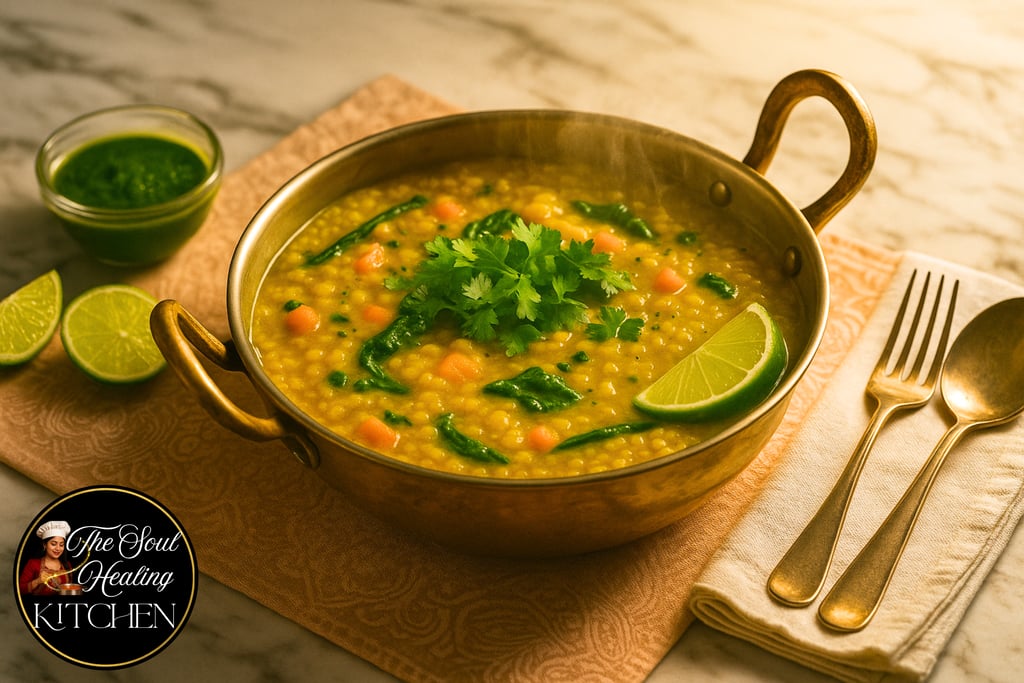
Kitchari Trio: Mung Dal & Basmati Cleansing Bowl
This classic Ayurvedic kitchari combines split mung dal and basmati rice in perfect harmony to cleanse the digestive tract, balance all three doshas, support gentle detoxification, and strengthen Agni without aggravation. This version forms the foundation of Ayurvedic cleansing and fasting protocols. It is sattvic, nourishing, and deeply grounding—ideal for detox days, post-illness recovery, digestive resets, and Panchakarma-style healing.
📝 Ingredients & Quantities
Base Ingredients
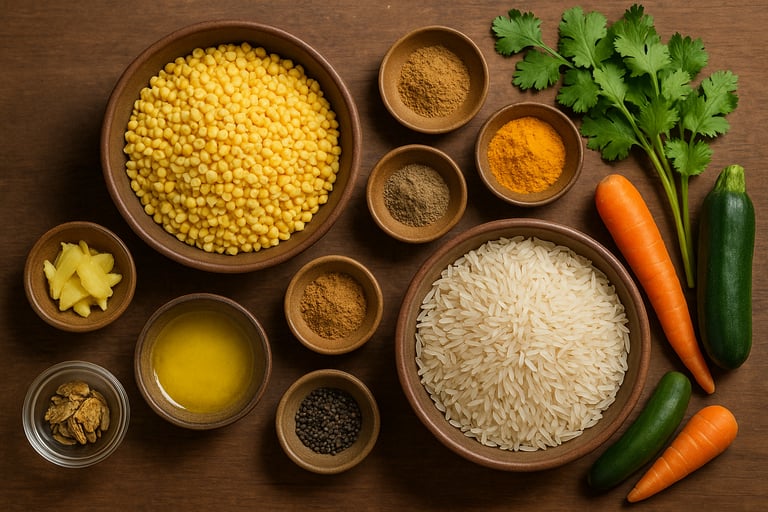
Split Yellow Mung Dal (Moong Dal) – ½ cup, washed & soaked 30 minutes
Substitute: Whole green mung (soaked 6–8 hours); red lentils for sensitive digestion
Basmati Rice – ½ cup, washed
Substitute: Brown basmati (heavier; use for Kapha), quinoa (Pitta-friendly)
Water – 3–4 cups
Use more water for a soupy detox consistency, less for a thicker porridge
Ghee – 1–2 teaspoons
Core Spices (Kitchari Trio)
Fresh Ginger – 1-inch piece, grated
Substitute: ½ teaspoon dry ginger (śuṇṭhi)
Cumin Seeds – ½ teaspoon
Coriander Powder – 1 teaspoon
Turmeric Powder – ½ teaspoon
A pinch of Black Pepper – enhances absorption and detox
Optional Enhancers
Mustard seeds – ¼ teaspoon (Kapha)
Fennel seeds – ½ teaspoon (Pitta)
Asafoetida (Hing) – 1 pinch (Vata & Kapha bloating relief)
Fresh vegetables (1 cup total):
Carrot, zucchini, spinach, small amount of lauki (bottle gourd), celery, green beans
Cilantro – handful, chopped (Pitta soothing)
Lime juice – added after cooling
🔥 Method of Preparation
Heat the ghee in a heavy-bottom pot on low–medium heat.
Once warm, add cumin seeds, allowing them to sputter and release aroma.Add grated ginger, sautéing for 1 minute until fragrant.
Add turmeric, coriander powder, and a pinch of black pepper, stirring gently so the spices bloom without burning.
Add the soaked mung dal and washed rice, stirring them into the spices so they become lightly coated.
This step enhances digestibility and prevents bloating.Pour in 3–4 cups of water depending on desired consistency.
Add optional vegetables at this stage if using.
Root vegetables first, soft vegetables later.Bring to a gentle boil, then reduce heat to low and simmer for 25–30 minutes, or until the mung dal breaks down and the rice becomes soft and creamy.
Stir occasionally to prevent sticking and add extra water if needed.
Turn off heat and allow the kitchari to rest for 2 minutes.
Add lime juice and fresh cilantro only once slightly cooled.Serve warm, ideally as a mono-meal for detoxification or during digestive reset.
⚖️ Dosha Effects
🌿 Vata
Deeply nourishing and grounding
Kitchari is one of Ayurveda’s best foods for Vata.
Add extra ghee.
Use more water for a soupy consistency.
Avoid bitter greens; add carrots or zucchini instead.
🔥 Pitta
Tridoshic and soothing when mildly spiced
Reduce ginger and black pepper.
Add fennel seeds and cilantro for cooling.
Add small amounts of greens (spinach or zucchini).
Use a little coconut oil if overheated.
🌱 Kapha
Highly cleansing and reducing
Use less ghee or skip entirely.
Add mustard seeds, hing, and extra black pepper.
Use less rice or substitute with quinoa or barley.
Add more warming vegetables (celery, green beans).
Connect
Questions? Reach out anytime, we're here.
© 2026. All rights reserved.